Gardener Wood Green: Recycling and Sustainability
Welcome to the Gardener Wood Green sustainability statement, an eco-friendly waste disposal area and hub for a sustainable rubbish gardening area that supports local biodiversity and a circular approach to green waste. This page outlines our targets, partnerships, transfer arrangements and transport commitments that together make Gardener Wood Green a model for urban garden waste management. We combine practical site operations with community-focused reuse so that green waste is a resource, not rubbish.Our Recycling Ambition and Local Waste Separation
We have set a clear recycling percentage target: 65% diversion of all garden and household recyclable waste by 2030. That target is aligned with boroughs' wider approach to waste separation, which typically separates glass, paper/card, mixed plastics, food/organic waste and dedicated garden waste collections. Our policies reflect these routines: we sort incoming material to maximise quality recycling streams, prioritise separate collection of organics for composting, and keep pollutants out of the green supply chain. Simple sorting on arrival reduces contamination and increases the value of recovered materials.
Eco-friendly Waste Disposal Area: transfer stations and logistics
Our eco-friendly waste disposal area is designed to feed local transfer stations efficiently, minimising vehicle miles and handling. We make regular use of nearby transfer hubs and processing sites, and coordinate with borough services to ensure seamless handover. Key local transfer stations and facilities we work with include:- Edmonton EcoPark – biological treatment and energy-from-waste integration;
- Tottenham Transfer Station – rapid consolidation for north-London routes;
- Hornsey and neighbouring transfer sites – materials recovery and bulking.
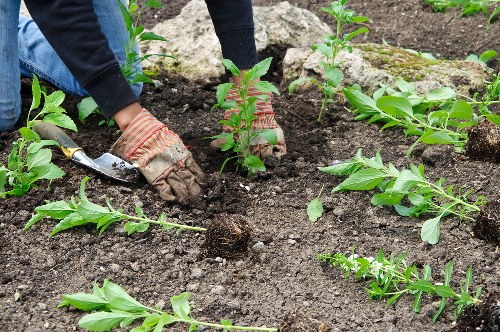
Our sustainable rubbish gardening area focuses on turning yard and household green waste into usable products: compost, mulches and soil conditioners. We operate temperature-controlled compost bays, windrow turning and screened maturation areas so that material is processed to standards suitable for reuse in public planting and private gardens. Where possible, we give priority to local reuse so that the carbon benefits of recycling are retained in the borough.
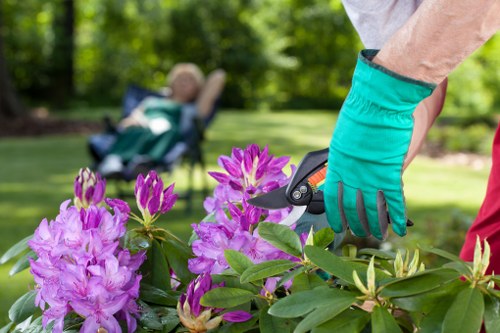 To extend the life of materials beyond compost, we run reuse and upcycling programmes: branches and woody material are chipped into paths and mulches; oversized timber is offered to community groups for repair projects; seeds and native planting stock are propagated for local green corridors. These activities help Gardener Wood-Green (and other Wood Green gardener services) reduce landfill diversion and support urban ecology.
Partnerships with charities and community groups are at the heart of our approach. We partner with a range of organisations to redistribute usable goods, support training and create social value. Example activities include:
- Food and surplus plant redistribution with food-focused charities to avoid edible waste;
- Reuse outlets and furniture charities receiving items that can be repaired rather than recycled;
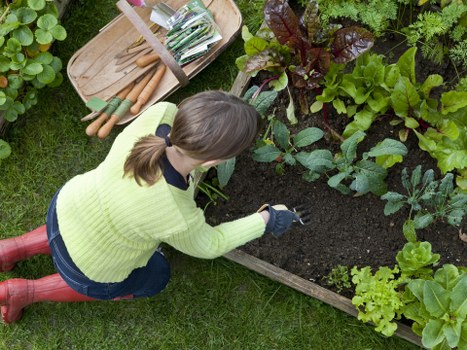
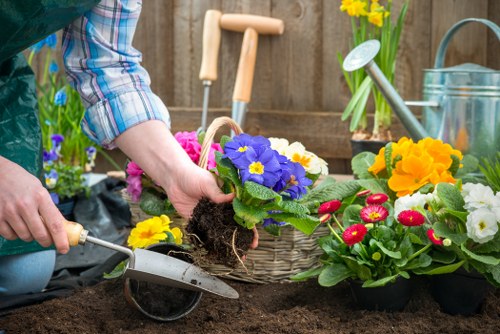
- Local green projects and volunteer groups that use compost and mulch for community planting.
 Logistics are a major factor in environmental performance. To address transport emissions we are progressively replacing diesel vans with low-carbon vans: battery-electric vehicles for local rounds and efficient hybrid models for longer transits. Our operational fleet policy emphasises route optimisation, load consolidation and the use of low-emission vehicles to keep our carbon footprint as small as possible while maintaining service reliability.
Monitoring and reporting enable us to track progress against the recycling percentage target. We measure inbound tonnages, contamination rates, and the yield of final recycled products. Regular audits, combined with borough waste-separation schemes, help fine-tune our sorting rules and communications with residents and local gardeners. Transparent measurement supports continuous improvement and helps us demonstrate compliance with local authority standards.
 Policy alignment and circular economy thinking shape site rules: hazardous garden chemicals and treated wood are segregated and sent to specialist handlers; appliances and metals are diverted to scrap facilities; clean wood and untreated biomass are prioritised for composting or biomass processing. Our site signage, accepted materials list and operational controls reinforce these policies so that the sustainable rubbish gardening area runs efficiently and safely.
Commitment to community and environment: Gardener Wood Green is committed to delivering an eco-friendly waste disposal area that supports borough waste separation practices, partners with charities for reuse, and operates a low-carbon logistics fleet. We aim to exceed our 65% recycling target by 2030 through ongoing improvements, innovation in on-site processing, and strong local partnerships. Together with residents, community groups and borough partners, Gardener Wood Green will keep green waste working locally for environmental and social benefit.